“I will return it next week.” Almost everyone has heard this, and almost everyone has lent money that never came back, not because the other person was dishonest, but because both sides forgot the exact amount and date.
An udhaar khata, a simple record of money given and taken, solves this. Shopkeepers in India have kept one for generations. You can use the same idea for friends, family, tenants or customers.
Why udhaar goes wrong
- No record of the amount. Was it ₹3,000 or ₹3,500? Without a note, the argument starts.
- No return date. “Soon” means different things to different people.
- Partial payments get mixed up. ₹500 back here, ₹1,000 there, and nobody knows the balance.
- Reminding feels awkward. So people stop asking, and the money is quietly lost.
What to record for every udhaar entry
Keep each entry short but complete. You need:
- Name of the person, and their phone number if possible.
- Amount and whether you gave it or took it.
- Date of the transaction.
- Expected return date, agreed out loud at the time.
- A short note, for example “hospital bill” or “shop stock”.
- Every repayment, as a separate entry, so the balance stays correct.
Always record money you have taken too. A clean khata on both sides is what keeps relationships healthy.
Agree on a date, even with close friends
Saying “Can you return it by the 10th?” is not rude. It gives both of you a clear point to check in. If the date passes, a reminder feels natural instead of personal.
How to remind someone politely
The best reminder is factual and friendly. It states the amount and date, and gives the person an easy way to pay. For example:
“Hi Suresh, just a reminder about the ₹2,000 from 5th November. Whenever it suits you this week, you can send it on this UPI ID. Thanks!”
A few tips that make reminders work:
- Send it a day or two after the agreed date, not weeks later.
- Mention the exact amount and date. It removes any doubt.
- Include your UPI ID or a payment link so paying takes ten seconds.
- Thank them when they pay, and update your khata immediately.
For shopkeepers: keep udhaar under control
Credit to regular customers brings loyalty, but unpaid credit can quietly eat your working capital. A few habits help:
- Set a credit limit for each customer and stick to it.
- Review the total pending udhaar every week.
- Send polite reminders on a fixed day, such as the 1st of every month.
- Give customers a clear statement of what they owe and what they have paid. Disputes usually disappear when both sides see the same list.
Paper khata or app?
A paper register works, but it cannot send reminders, add up balances for you, or be backed up if it gets lost or wet. A phone app does all three and is always with you.
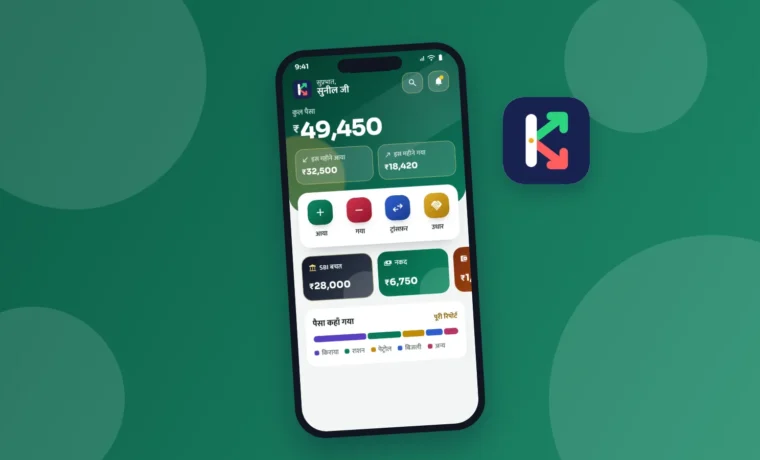
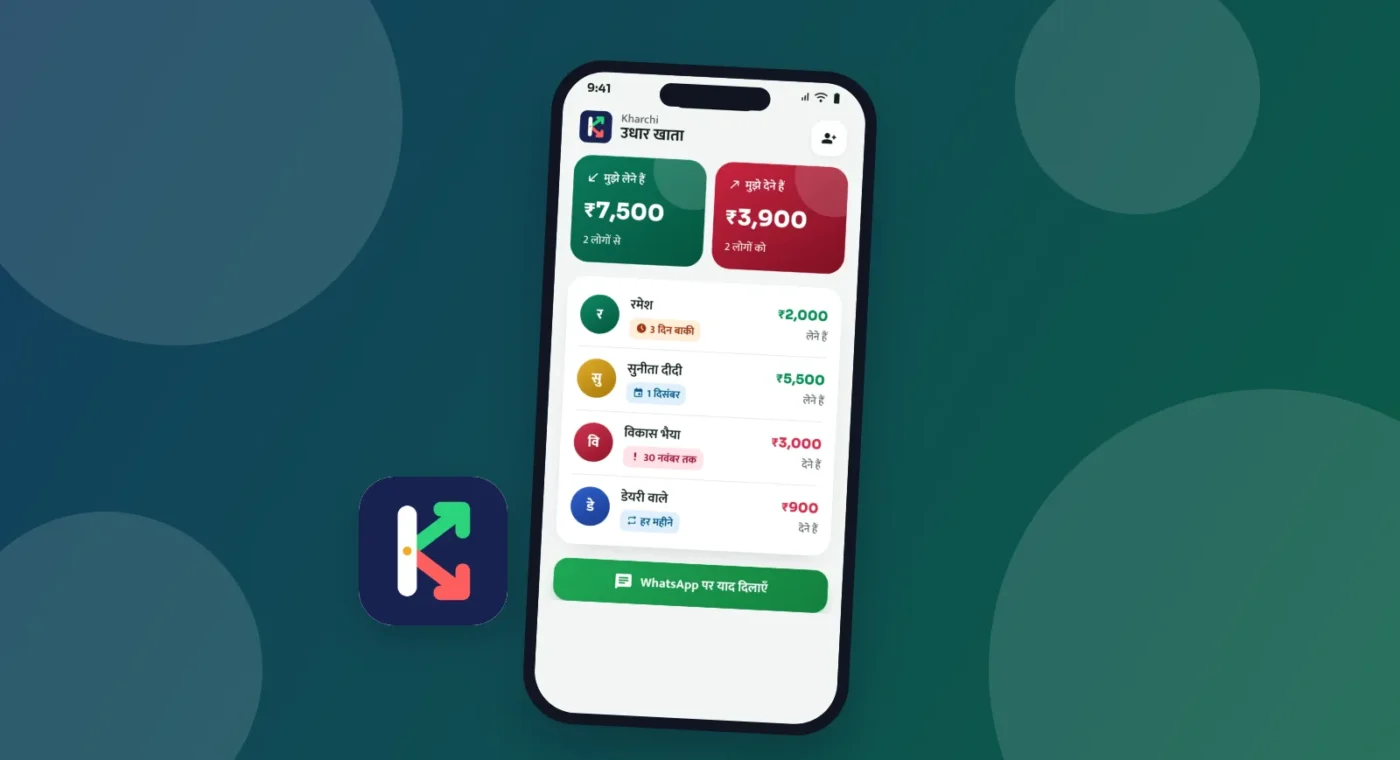
In Kharchi, the udhaar khata is built in. You can record money given and taken, set return dates with reminders, send a WhatsApp reminder with one tap and share a PDF statement for each person. Your records stay on your phone with backup to your own Google Drive. You can get it free on Google Play.
Frequently asked questions
Is it okay to charge interest on udhaar to friends?
That is a personal decision. If you do, agree on it in advance and write it down, so there are no surprises later.
What if someone denies the amount?
A dated record with notes is your best defence. Sharing a clear statement usually resolves the matter calmly.
Should I record small amounts like ₹100?
Yes. Small amounts are the easiest to forget, and they add up across many people.
The short version
Write down every udhaar with the amount, date and agreed return date, record each repayment, and remind people politely with the exact figures and an easy way to pay. Your money comes back, and your friendships stay intact.